Laser Cladding / DLD
Localised metal deposition with a fusion bond, used to add functional surfaces to new parts or restore damaged areas. Internal and external surfaces are assessed against deposition-head access.
Laser Cladding / DLD → AESAAportaciones Especiales
03 / Desalination and pump components
CNC machining, cladding, thermal spray and grinding for pump and valve components. AESA assesses the substrate, geometry and service conditions before defining the work.
Shafts, sleeves, impellers and valve components must be assessed for both geometry and surface function. A new part may require a localised deposit; a used component requires an assessment of its condition and the areas to be restored. The drawing and acceptance requirements establish the manufacturing or repair scope.
AESA machines Super Duplex Stainless Steel, Inconel and other materials in its machining range. For desalination service, a material family alone is insufficient: the grade, supply condition and process fluid are needed. Cladding or coating selection also considers temperature, observed wear and the required final finish.
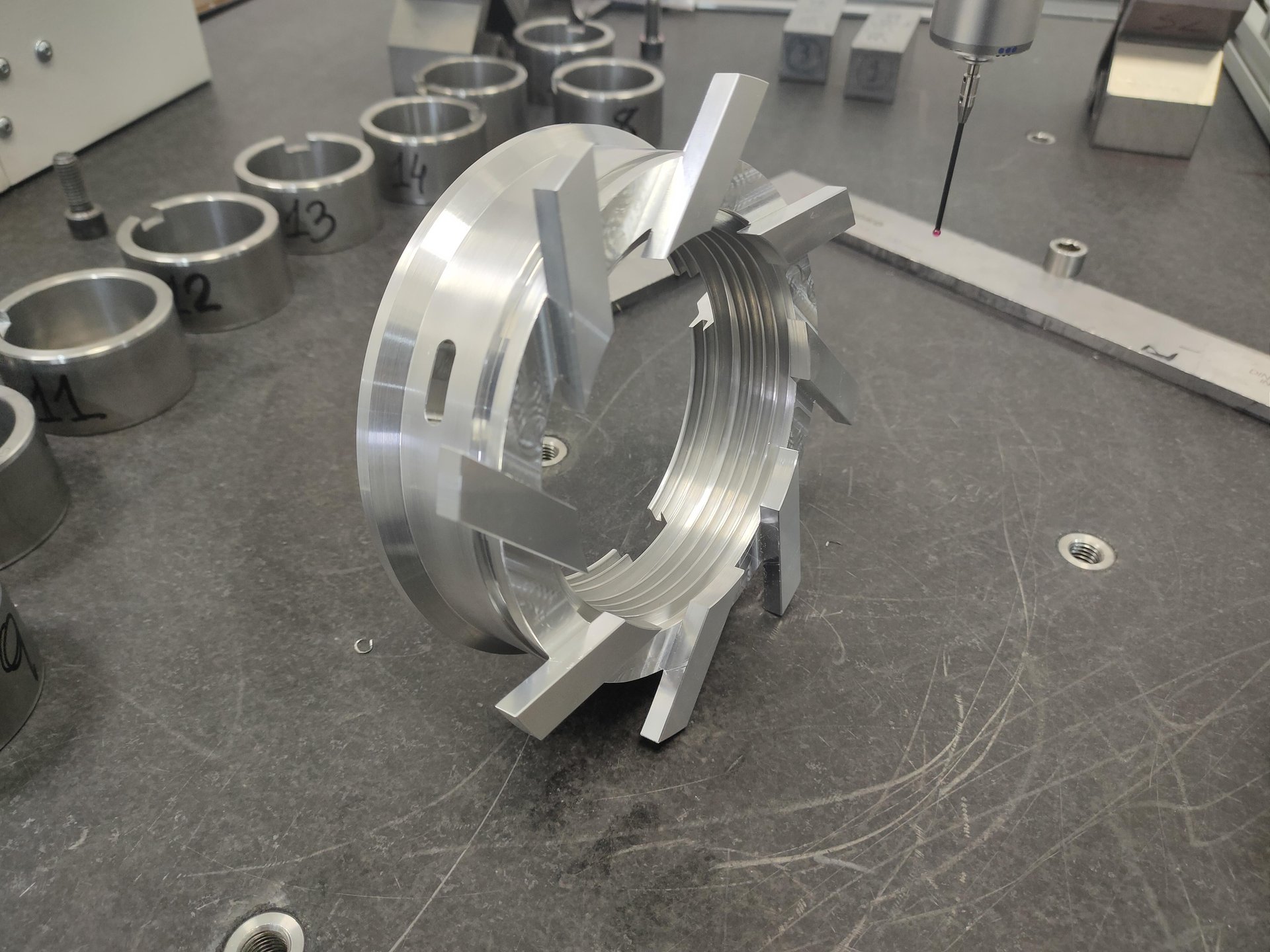
Localised metal deposition with a fusion bond, used to add functional surfaces to new parts or restore damaged areas. Internal and external surfaces are assessed against deposition-head access.
Laser Cladding / DLD →Plasma transferred arc cladding. AESA uses Stellite 1, 6 and 12, Inconel 625 and Colmonoy 4, 5 and 6, alongside other confirmed materials. Component geometry and thermal behaviour influence the proposed work.
PTA →Thermal spray coatings selected for wear and the service environment. AESA uses chromium carbide–nickel chromium Diamalloy 3007 and assesses tungsten carbide coating systems.
HVOF →Atmospheric plasma spray for ceramic coatings, with chromium oxide as AESA’s confirmed representative material. Selection requires review of contact conditions and the required surface finish.
APS →CNC machining prepares component geometry and deposition areas. Grinding can provide the subsequent finish where the material and component require it. The surface processes listed above are robotised; dimensional inspection is integrated during production and on completion, using equipment including the Zeiss Contura G2.
We supply certificates relating to the base material, cladding material and quality control. Our integrated system identifies the cladding batch applied to each component. Documentation and inspection requirements are reviewed with the order.
AESA applied Stellite 6 by robotised laser cladding to a defined area of a new super duplex impeller. The deposit adds a localised functional surface to the new component.
View the Stellite 6 application →AESA accepts one-off parts and works with international customers. Our usual response time to an RFQ is three working days. Manufacturing and repair lead times are confirmed in the quotation.
Discuss your component with AESA ↗