 AESAAportaciones Especiales
08 / Design and manufacturing
Reverse engineering from sample to finished component
From a physical sample to a 3D model, drawings and a finished component.
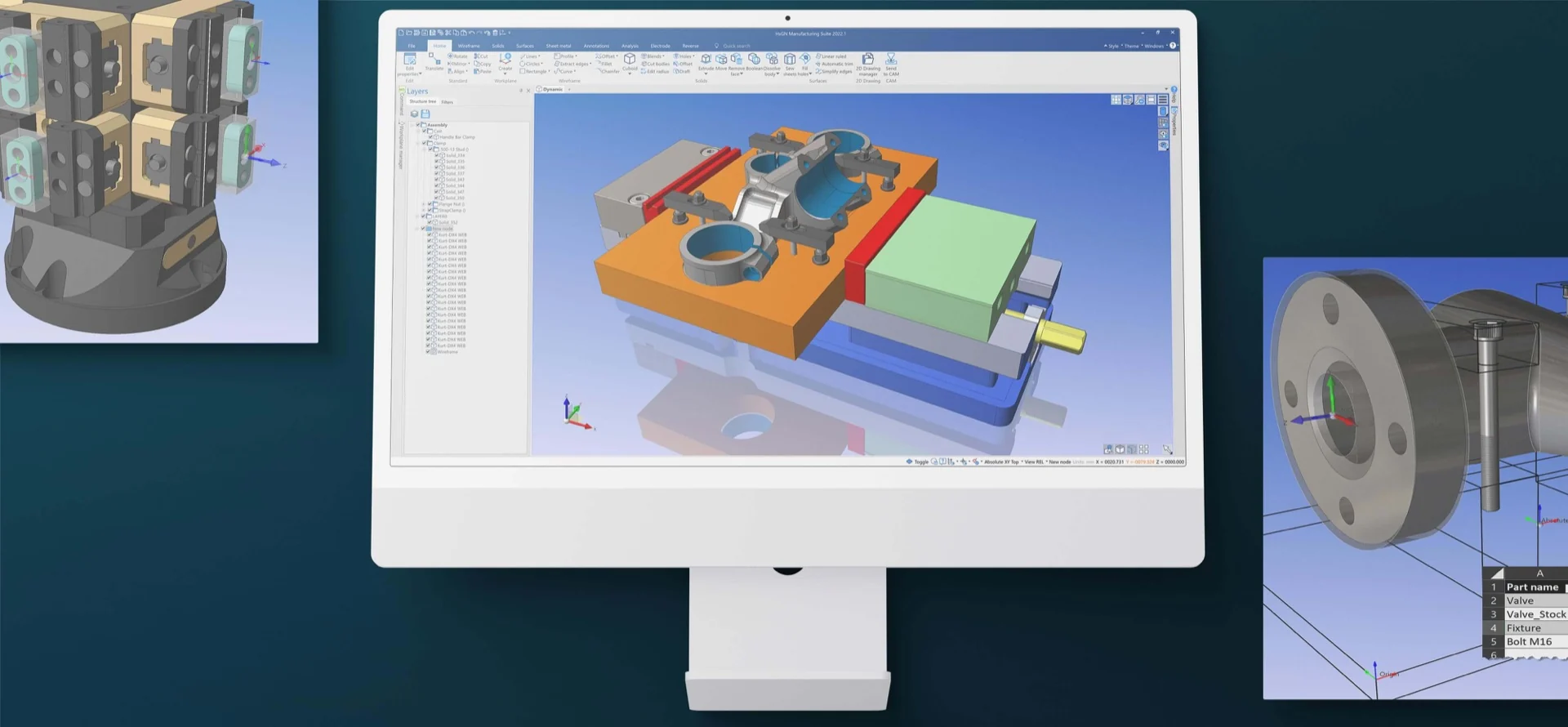
Request a Quote ↗We reconstruct component geometry from a physical sample using Hexagon DESIGNER and prepare it for manufacture. Measurement with the Zeiss Contura coordinate measuring machine is combined with CAD design and CNC programming in ESPRIT, using digital twins of our lathes.
AESA's own video. Cover image by Hexagon.
Technical information
Reverse Engineering
Applications and process selection
The scope can include a 3D model, STEP file, drawings and a finished component. For a worn or damaged sample, the required geometry and function are agreed first; reproducing wear alone does not define the component the customer needs.
A sample does not establish every manufacturing requirement. Material, treatments, tolerances, functional surfaces and original condition must be determined during the review. Feasibility depends on access to the geometry and the available measurement and manufacturing equipment.
What you receive
- Finished component
- 3D design
- STEP file
- Component drawings
Equipment
- Hexagon DESIGNER: CAD design and reverse engineering
- ESPRIT: CNC programming and simulation using digital twins of our lathes
- Zeiss Contura: dimensional measurement of the sample component
From sample to finished component
- Sample assessment and measurement: we examine the original component and its functional surfaces to establish the geometric information required.
- CAD reconstruction: we develop the 3D model in DESIGNER. If the sample is worn or damaged, we agree the geometry to be restored before finalising the design.
- Documentation: we prepare the STEP file and drawings, defining the component’s manufacturing requirements.
- Programming and manufacture: we use ESPRIT and digital twins of our lathes to prepare the machining operations and manufacture the component.
- To discuss your component, send photographs, approximate dimensions, its function and the quantity required, and let us know whether a sample is available. Material and functional requirements are confirmed during the technical review.
Technical enquiries
Frequently asked questions
What do I receive from a reverse engineering job?
The scope can include a 3D design, STEP file, drawings and a finished component. Deliverables are established for the order.
How do you use DESIGNER and ESPRIT?
Hexagon DESIGNER is used for CAD design and reverse engineering. ESPRIT is used for CNC programming and simulation with digital twins of the lathes.
What if the sample is worn?
The component and its functional surfaces are reviewed, and the geometry to be reconstructed is agreed before finalising the design and manufacturing the part.
Do you accept one-off components?
Yes. AESA accepts one-off components. Feasibility and scope are assessed against the component and its requirements.
How soon will you respond to an RFQ?
Our usual RFQ response time is three working days. Manufacturing or repair lead time is established in the quotation.
Do you work with customers outside Spain?
Yes. AESA works internationally. Please include the country of origin, component location and delivery requirements in your enquiry.
What documentation and traceability do you provide?
AESA provides certificates relating to the base material, deposition material and quality control for the job. Our integrated management application identifies the cladding batch applied to each component. Documentation and inspection requirements are reviewed with the order.
What should I include in an RFQ?
Include the component, known material, quantity, dimensions, service conditions and required outcome. Drawings can be sent to aesa@aportaciones-especiales.com. The website form does not support file attachments.